Friction Isn't Failure
On stairs, pages, and problems

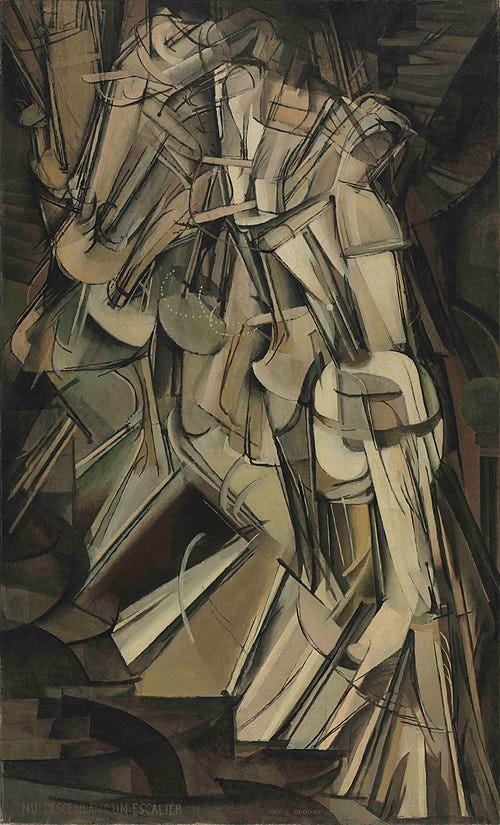
There's a moment I keep meeting on stairs, on pages, in problems.
Not the dramatic moment. The small one.
The instant the world pushes back, just enough to be felt.
And my fast, moral, impatient mind calls it failure.
Not information. Not contact. Failure.

Let's stay with it. Right there. Before the verdict.
I’d rather watch the body meet the stair
that brief resistance blooming at the joint
not as a sentence, branded in the air,
but as the world asking: try another way.

The foot lifts, commits, then trembles mid-air;
a sting, then meaning rushes in too fast;
You shouldn't feel this. You are late. Beware.
And failure sneers: of course you can't.

There is a pain that says: stop. This is harm,
bright lightning, clean, that rewrites gait at once.
There is the heat that comes in later, warm,
the swollen invoice for a brave old lunge.

But there is also learning's stubborn edge:
the rub of pattern changing under skin,
the nervous system holding its quiet line,
adjusting, testing, saying: try again.

Friction isn't failure. It's how we begin.
Here's the move I'm practicing lately:

When resistance arrives, I try not to interpret it first.
I ask one quieter question: What kind of signal is this?

Some signals are stop signs. Clean, immediate, non-negotiable.
But some resistance is a hinge: the system revising its pattern in real time.

So I stay one breath longer.
I change the angle.
I slow the pace.
I try again.
Not to prove anything, but to keep contact long enough for the world to answer back.